
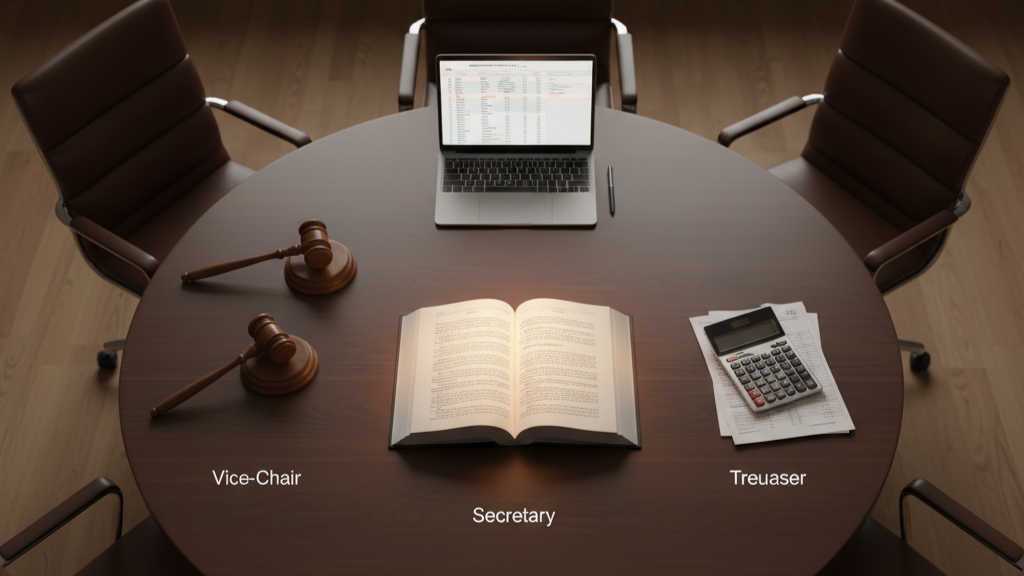
A high-functioning board of directors is the cornerstone of any successful organization, whether a multinational corporation or a local non-profit. While every board member shares the ultimate goal of guiding the organization toward its mission through sound governance, not all board member positions are the same. The structure of a board is like a well-oiled machine, with each part playing a distinct yet interconnected role.
Understanding these roles is critical for both organizations seeking to build a strong board and individuals preparing to serve. This comprehensive guide will break down the common board member positions, detail the universal responsibilities all directors share, and outline the key traits of an effective board member.

What is a Board Member?
A board member is an individual elected or appointed to serve on the governing body of an organization—the board of directors. This board is collectively responsible for overseeing the organization’s strategic direction, financial health, and overall governance. Board members can serve on corporate boards, non-profit boards, or for other types of institutions.
Their primary duty is to act in the best interests of the organization and its stakeholders. Some board members, particularly those on the executive committee, have additional responsibilities, such as setting performance goals for the CEO and evaluating senior management. While some board members, especially in the corporate world, receive compensation, many, particularly in the non-profit sector, serve voluntarily, contributing their expertise out of a commitment to the cause.
Key Board Member Positions and Their Titles
The specific titles and duties can vary based on an organization’s industry, size, and mission. However, most boards are built around a core set of board member positions.
1. Board President (or Chair)
The Board President is the highest-ranking officer and provides leadership to the entire board. This role is pivotal for setting the tone and ensuring the board operates effectively.
- Key Responsibilities: Presides over all board meetings, sets agendas in collaboration with the CEO/Executive Director and Secretary, ensures meetings are productive and focused, and often serves as the primary public face of the organization. The Chair works closely with the CEO to provide guidance and support, without micromanaging day-to-day operations.
2. Vice President (or Vice Chair)
The Vice President acts as the second-in-command and is a crucial role for succession planning.
- Key Responsibilities: Supports the President in their duties, steps in to lead meetings and make decisions when the President is absent, and often takes on special projects or oversees specific committees. A strong VP ensures a smooth transition should the President’s term end.
3. Board Secretary
The Board Secretary is the guardian of the board’s institutional memory and integrity. This role is administrative in nature but critical for compliance and transparency.
- Key Responsibilities: Accurately records and distributes meeting minutes, maintaining a formal record of all discussions, decisions, and action items. They also manage the organization’s official documents, including bylaws, policies, and legal filings, and ensure meetings are notified and conducted according to procedural rules (Robert’s Rules of Order, etc.).
4. Board Treasurer
The Board Treasurer is the board’s financial expert, providing essential oversight of the organization’s fiscal health.
- Key Responsibilities: Oversees the development and monitoring of the annual budget, reviews financial statements and reports, and explains complex financial data to other board members in an understandable way. They ensure the organization complies with financial regulations and advise the board on financial risk management, investment strategies, and resource allocation.
5. Emeritus Board Member
An Emeritus position is an honorary title bestowed upon a former board member who has completed their term limit but whose wisdom and experience remain valuable.
- Key Responsibilities: While an emeritus member typically does not have voting rights, they attend meetings and provide historical context, mentorship to newer board members, and strategic advice. This role helps preserve institutional knowledge and maintains a connection with dedicated long-time supporters.
The 7 Core Responsibilities of Every Board Member
Beyond their specific titles, all board members share a set of fundamental legal and ethical responsibilities. These duties form the foundation of good governance.
1. Governance and Oversight
The board’s primary role is to provide high-level oversight, ensuring the organization’s activities and performance align with its established mission and strategic goals. This involves regularly reviewing operational reports, financial statements, and outcomes against targets.
2. Upholding Fiduciary Duty
Each board member has a fiduciary duty to act in the best interest of the organization. This means putting the organization’s needs above personal interests, making prudent financial decisions, safeguarding its assets, and ensuring resources are used effectively to advance its mission. Transparency in these actions is non-negotiable.
3. Strategic Planning
Board members are not involved in day-to-day management but are deeply engaged in shaping the future. They play a critical role in setting the organization’s vision, reviewing and approving long-term strategic plans, and making significant decisions about mergers, acquisitions, or major capital expenditures.
4. Risk Management
A key board function is to identify, assess, and mitigate risks that could threaten the organization. This includes financial risks, operational risks, legal liabilities, and reputational damage. The board must define the organization’s “risk appetite” and ensure there are policies and procedures in place to manage exposure.
5. Evaluating and Hiring Executive Leadership
The board is responsible for selecting, hiring, compensating, and annually evaluating the performance of the organization’s top executive (e.g., the CEO or Executive Director). They must also have a succession plan in place and be prepared to make leadership changes when necessary for the health of the organization.
6. Ensuring Compliance and Ethical Integrity
The board must ensure the organization complies with all applicable laws, regulations, and industry standards. Furthermore, they set the ethical tone for the entire organization by adopting and upholding a code of conduct, thereby protecting its reputation and legal standing.
7. Advocacy and Representation
Board members serve as ambassadors for the organization. They represent its mission to the public, stakeholders, and potential donors, advocate for its cause, and leverage their personal and professional networks to build partnerships and enhance its public profile. In non-profits, this often includes active participation in fundraising.
5 Essential Traits of an Effective Board Member
Filling a board seat requires more than just a resume. The most effective individuals in board member positions possess these key characteristics:
- Unwavering Commitment: They prioritize their board duties, prepare thoroughly for meetings, meet deadlines, and actively participate in discussions and committee work.
- Integrity and Ethical Fortitude: They lead by example, demonstrating honesty, transparency, and high moral standards in all their actions and decisions.
- Accountability: They take ownership of their commitments and decisions, accepting responsibility for both successes and setbacks.
- Leadership and Influence: They can inspire others, build consensus, and effectively advocate for the organization’s mission both inside and outside the boardroom.
- A Mindset of Continuous Learning: They stay informed about industry trends, best practices in governance, and emerging issues that could impact the organization.
Empowering Every Board Member Position with OnBoard
Effective governance requires more than just talented people; it requires the right tools. OnBoard’s board intelligence platform is designed to empower every board member, from the President to the newest director, to perform their roles effectively.
OnBoard empowers each board member position by simplifying key tasks. It enables the Secretary to create and distribute agendas and minutes effortlessly. It provides the Treasurer with a secure, centralized hub for financial reports. For strategic governance, the platform ensures secure communication and easy access to materials, enhancing collaboration for the entire board.
Features like a built-in Board Meeting Agenda Template, secure voting, and granular document permissions ensure that boards can operate with the efficiency, security, and transparency required in today’s landscape.
Building a Cohesive and Effective Board
Understanding the distinct board member positions and their shared responsibilities is the first step toward building a cohesive and high-performing board. When each member clearly understands their role and is equipped with the right traits and tools, the entire board can work in harmony to provide the strategic guidance and oversight necessary for long-term organizational success.
Frequently Asked Questions (FAQs)
The main positions on a board are typically titled based on leadership and committee roles. The core leadership titles are:
Chairperson (or Chairman/Chairwoman): The leader of the board.
Vice Chairperson: Supports the Chair and may act in their absence.
Treasurer: Oversees financial matters (more common in nonprofits).
Secretary: Responsible for official records and meeting minutes.
Other positions include committee chairs (e.g., Chair of the Audit Committee) and general board members, often referred to as “Directors.”
Board members have two primary types of roles:
Fiduciary Roles: They have a legal duty of care, loyalty, and obedience to act in the best interests of the organization and its shareholders. This involves overseeing strategy, risk, and financial performance.
Functional Roles: These are specific responsibilities, often tied to a title or committee assignment. For example, the Treasurer oversees financial oversight, while the Audit Committee chair oversees internal controls and the external audit.
The mandatory positions are typically defined by corporate law in the company’s jurisdiction. For most corporations, the legally required positions are:
Chairperson (or President of the Board)
Secretary
Some jurisdictions also require a Treasurer. Public companies are further required by stock exchanges to have certain board committees, like an Audit Committee, chaired by an independent director.
Board members are categorized by their relationship to the company:
Inside Director: A member who is also an employee or major shareholder of the company (e.g., the CEO).
Outside Director: A member with no other significant ties to the company.
Independent Director: A specific type of outside director who has no material or pecuniary relationship with the company or its management, ensuring objective judgment.
A well-balanced board should include a mix of the following key profiles:
The Industry Expert: Deep knowledge of the company’s specific market.
The Financial Expert: Strong background in accounting, finance, or M&A (often chairs the Audit Committee).
The Technology/Digital Expert: Understands digital transformation, cybersecurity, and tech trends.
The Governance/Compliance Expert: Experience with legal, regulatory, and risk management frameworks.
This often refers to common board committee structures, which are essential for effective governance:
Audit Committee: Oversees financial reporting, internal controls, and the independent audit.
Compensation (or Remuneration) Committee: Sets executive compensation and oversees incentive plans.
Nominating and Governance Committee: Identifies new board candidates and oversees governance practices.
Risk Committee: Monitors and advises on enterprise-wide risks (may be combined with Audit).
This refers to how the top leadership roles are organized. The two main models are:
Combined Role: The CEO is also the Chairperson of the board. This can streamline decision-making but may reduce independent oversight.
Separate Role: The CEO and Chairperson roles are held by two different people. This is considered a best practice in corporate governance as it ensures a clear separation between management (run by the CEO) and board oversight (led by the Chair).
Also known as a “staggered board,” this is a structure where the board is divided into classes (typically three), with each class serving a different term length (e.g., one class is elected each year for a 3-year term). This makes it harder for a hostile acquirer to replace the entire board at once, acting as a takeover defense.
A board term is the length of service for a director before they need to be re-elected.
Typical Term Length: Three years is the most common term for corporate boards.
Term Limits: Many boards have term limits (e.g., 3 terms of 3 years each) to encourage fresh perspectives.
Re-election: Directors are typically re-elected by shareholders at the Annual General Meeting (AGM) at the end of their term.
